
Summary
The main ingredients in Caribbean food centre around fresh seafood, tropical fruits, root vegetables, herbs, spices, and coconut-based elements that reflect the region’s climate and culture. These ingredients work together to create bold yet balanced flavours that are both comforting and vibrant. At Cocktail Kitchen, many of these staples are brought together in creative ways, showcasing how Caribbean ingredients can feel both traditional and modern.
Caribbean food is known for its colour, aroma, and depth of flavour. Influenced by African, European, Indigenous, and Asian traditions, the cuisine relies heavily on fresh, locally available ingredients. From the sea to the soil, Caribbean cooking celebrates what the islands naturally provide. Understanding these core ingredients helps explain why Caribbean dishes are so distinctive and widely loved.
Fresh Seafood and Proteins
Fresh seafood is one of the most important ingredients in Caribbean food, especially on islands like Barbados. Fish, shrimp, lobster, and other shellfish are often prepared simply to highlight their natural flavour.
Because seafood is frequently sourced locally, it is commonly grilled, charred, baked, or gently simmered in broths with herbs and spices. This approach keeps dishes light while still delivering depth and richness.
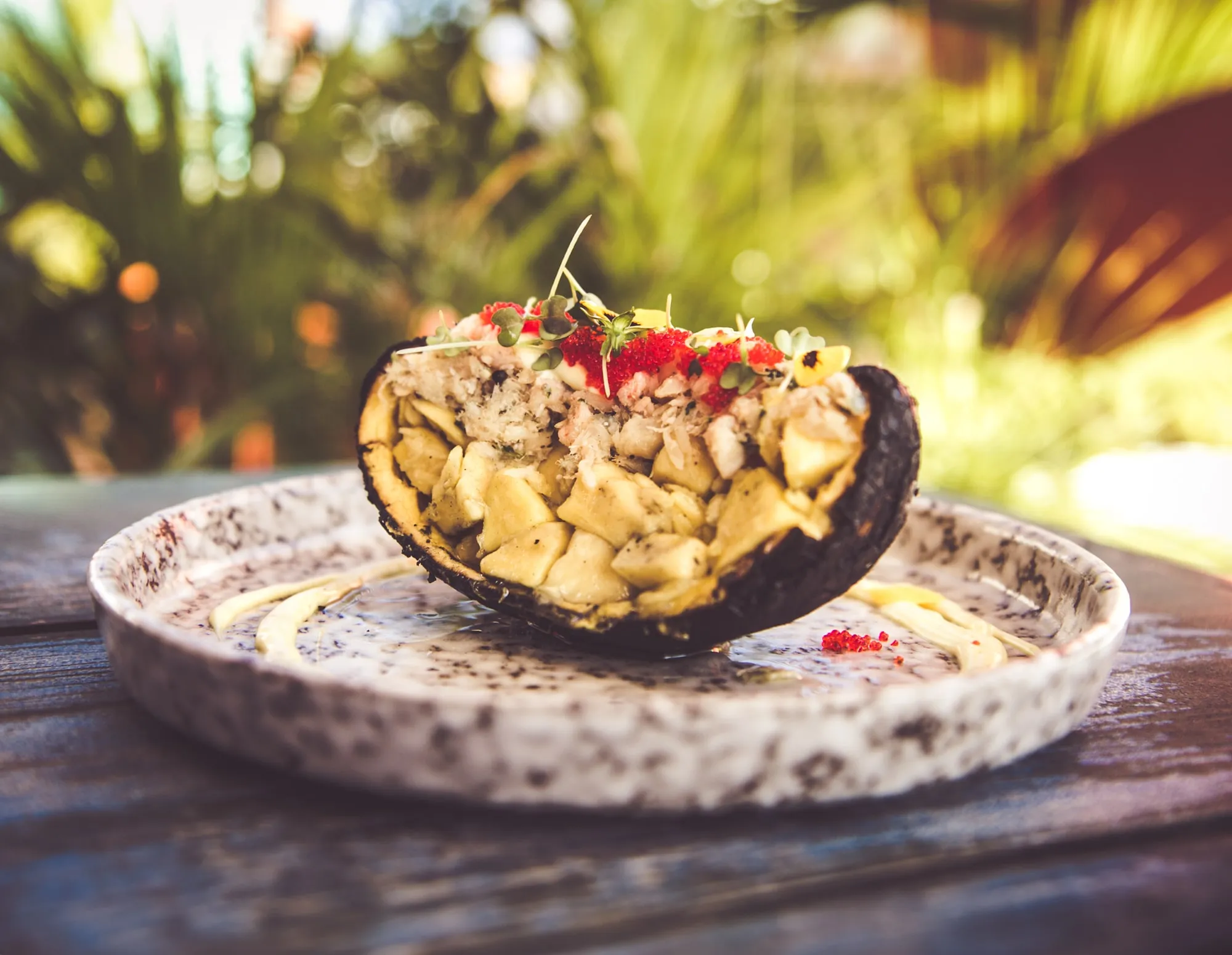
At Cocktail Kitchen, seafood dishes such as charred catch, parmesan catch, shrimp-based plates, and lobster dishes reflect this reliance on fresh protein paired with thoughtful seasoning.
Root Vegetables, Fruits, and Starches
Root vegetables and starchy fruits form the backbone of many Caribbean meals. Ingredients like breadfruit, sweet potato, cassava, and plantain provide substance and balance to seafood and vegetable dishes.
Breadfruit, in particular, is a standout ingredient — roasted, puréed, or fried — offering a nutty flavour and creamy texture. Though often treated as a starch, it is botanically a fruit and plays a central role in island cooking.
These ingredients are frequently paired with vegetables and fruits such as watermelon, avocado, mango, and citrus to add freshness and contrast, creating meals that feel hearty yet refreshing.
Herbs, Spices, and Coconut-Based Elements
Herbs and spices are essential to Caribbean flavour, bringing warmth and complexity without overwhelming the main ingredients. Common seasonings include thyme, garlic, ginger, scallions, pepper sauces, and spice blends unique to each island.
Coconut appears often in Caribbean cooking, whether in curries, broths, sauces, or crusts. Coconut milk and coconut-based preparations add richness while keeping dishes dairy-light and aromatic.
These flavour-building ingredients are what give Caribbean food its signature vibrancy and layered taste.
If you’d like to experience how these ingredients come together on the plate, contact us at Cocktail Kitchen to learn more about our menu and Caribbean-inspired dishes.
FAQ
- Is Caribbean food always spicy?
Not always — while heat is common, many dishes focus more on herbs, aromatics, and balanced seasoning. - Why is seafood so common in Caribbean cuisine?
The islands’ geography makes fresh fish and shellfish readily available and central to daily cooking. - Is breadfruit a vegetable or a fruit?
Breadfruit is botanically a fruit, though it is often used like a starchy vegetable in cooking. - What role does coconut play in Caribbean food?
Coconut adds richness and aroma through milk, sauces, broths, and crusts.
- Can Caribbean food be light as well as hearty?
Yes — many dishes balance rich elements with fresh vegetables, herbs, and citrus for lighter meals.
Introduction
Mi tincidunt elit, id quisque ligula ac diam, amet. Vel etiam suspendisse morbi eleifend faucibus eget vestibulum felis. Dictum quis montes, sit sit. Tellus aliquam enim urna, etiam. Mauris posuere vulputate arcu amet, vitae nisi, tellus tincidunt. At feugiat sapien varius id.
Eget quis mi enim, leo lacinia pharetra, semper. Eget in volutpat mollis at volutpat lectus velit, sed auctor. Porttitor fames arcu quis fusce augue enim. Quis at habitant diam at. Suscipit tristique risus, at donec. In turpis vel et quam imperdiet. Ipsum molestie aliquet sodales id est ac volutpat.

Leifend sed nisi. Pulvinar at orci, proin imperdiet commodo consectetur convallis risus. Sed condimentum enim dignissim adipiscing faucibus consequat, urna. Viverra purus et erat auctor aliquam. Risus, volutpat vulputate posuere purus sit congue convallis aliquet. Arcu id augue ut feugiat donec porttitor neque. Mauris, neque ultricies eu vestibulum, bibendum quam lorem id. Dolm posuere ornare leo metus, ultricies. Blandit duis ultricies vulputate morbi feugiat cras placerat elit. Aliquam tellus lorem sed ac. Montes, sed mattis pellentesque suscipit accumsan. Cursus viverra aenean magna risus elementum faucibus molestie pellentesque. Arcu ultricies sed mauris
Leifend sed nisi. Pulvinar at orci, proin imperdiet commodo consectetur convallis risus. Sed condimentum enim dignissim adipiscing faucibus consequat, urna. Viverra purus et erat auctor aliquam. Risus, volutpat vulputate posuere purus sit congue convallis aliquet. Arcu id augue ut feugiat donec porttitor neque. Mauris, neque ultricies eu vestibulum, bibendum quam lorem id. Dolm posuere ornare leo metus, ultricies. Blandit duis ultricies vulputate morbi feugiat cras placerat elit. Aliquam tellus lorem sed ac. Montes, sed mattis pellentesque suscipit accumsan. Cursus viverra aenean magna risus elementum faucibus molestie pellentesque. Arcu ultricies sed mauris
.jpg)

.jpg)